← Projects/Curve-Fit
Curve-Fit Prototype Exhibited at the University of Stuttgart
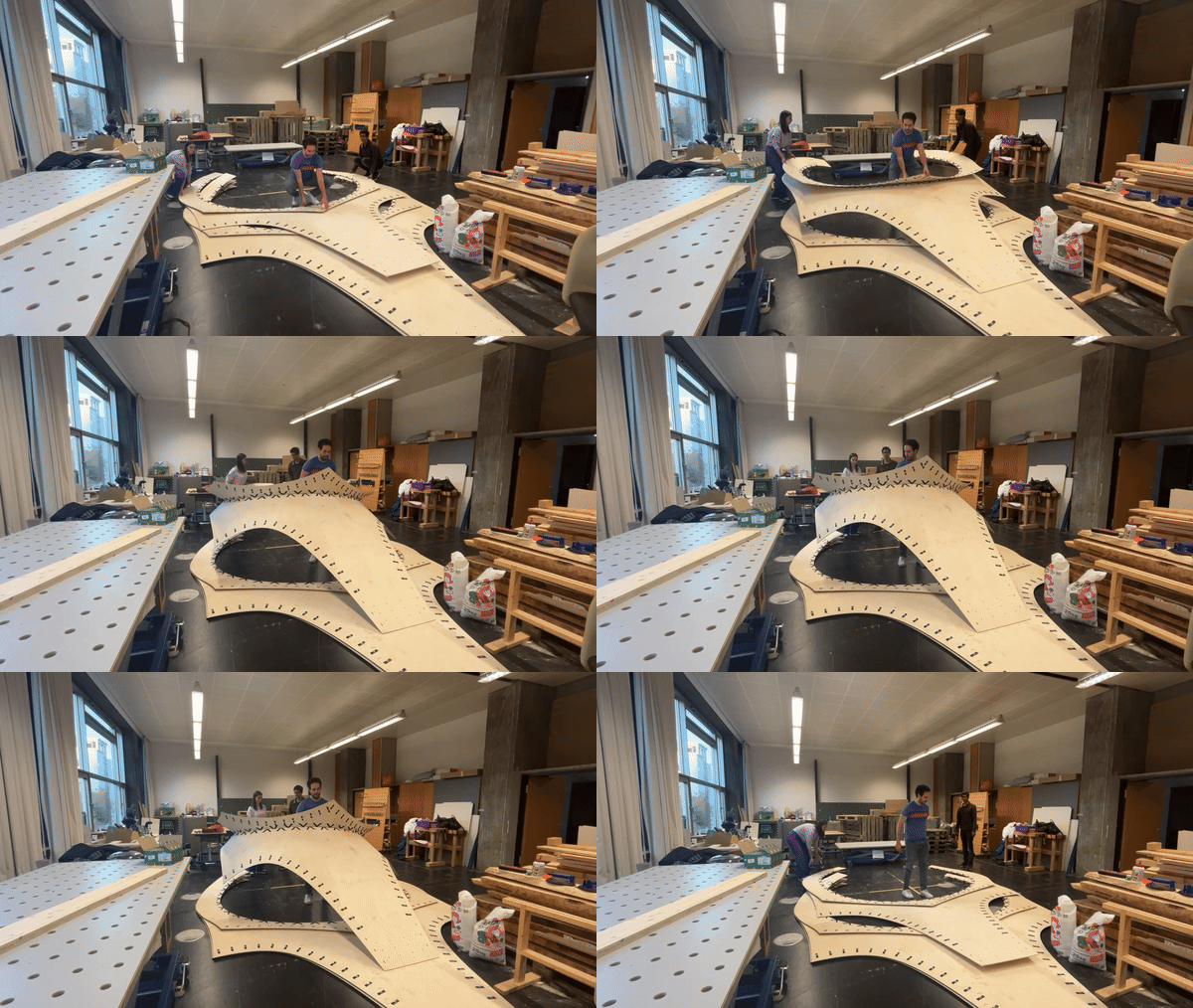
Three person load test
2022 ITECH graduates on top of Prototype
Curve-Fit prototype exhibited at the University of Stuttgart
A curved canopy supported by columns as a proposed architectural use case of system
Transformation of a single module from a flat state through curved-folding
Full Research Scope
Full Research Scope
Assembly on site, from module delivery to transformation and assembly
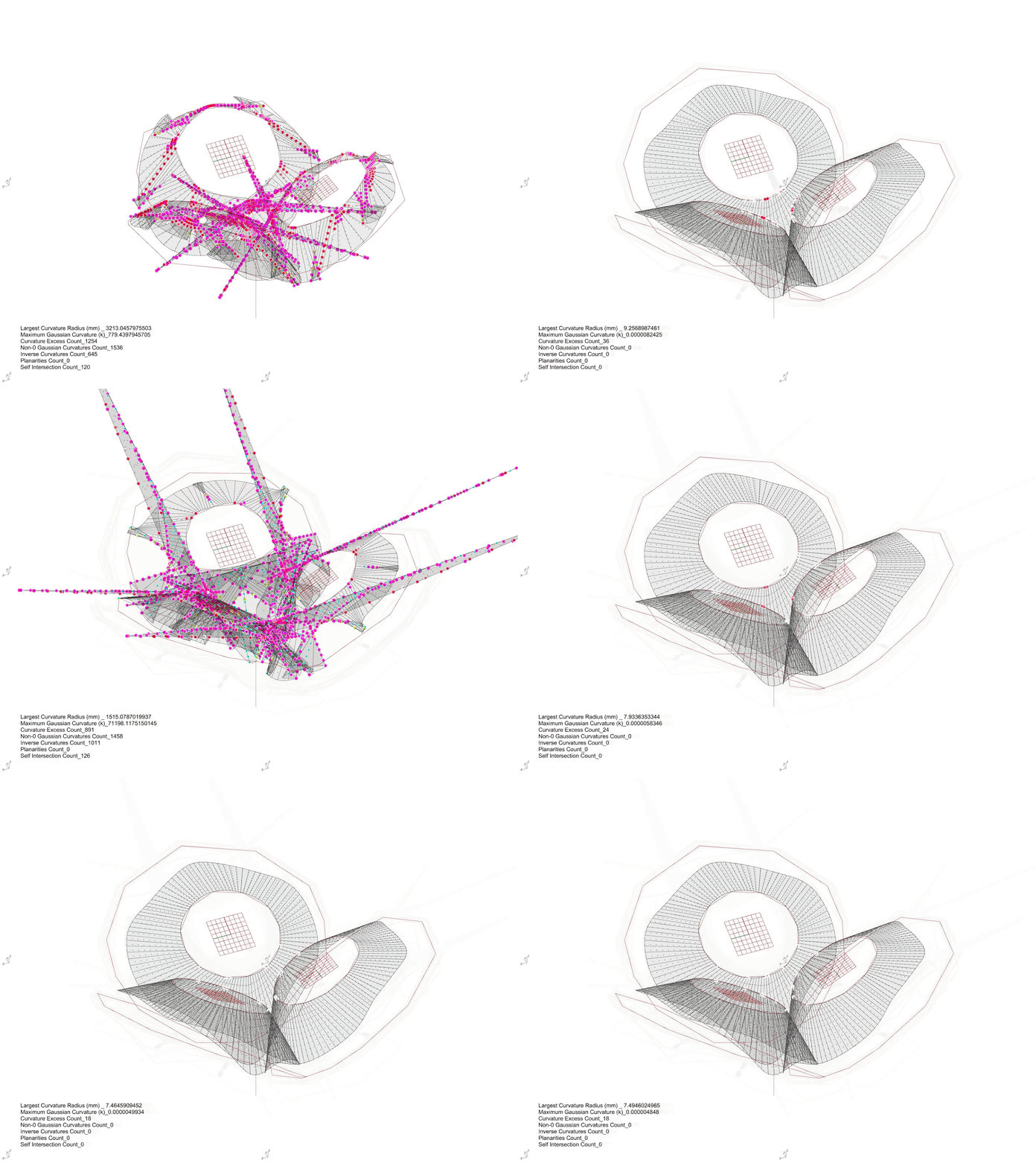
Workflow integration between a structural model and surface modeling enabled by a Single-Objective Optimization process
Single-Objective Optimization (SOO) iterations used to find surface geometries that comply with material and structural limitations
Plane intersection method for tangential surface modeling
Method for modeling stacked curved-folded surfaces
Strain imposition method used in a Finite Element Analysis
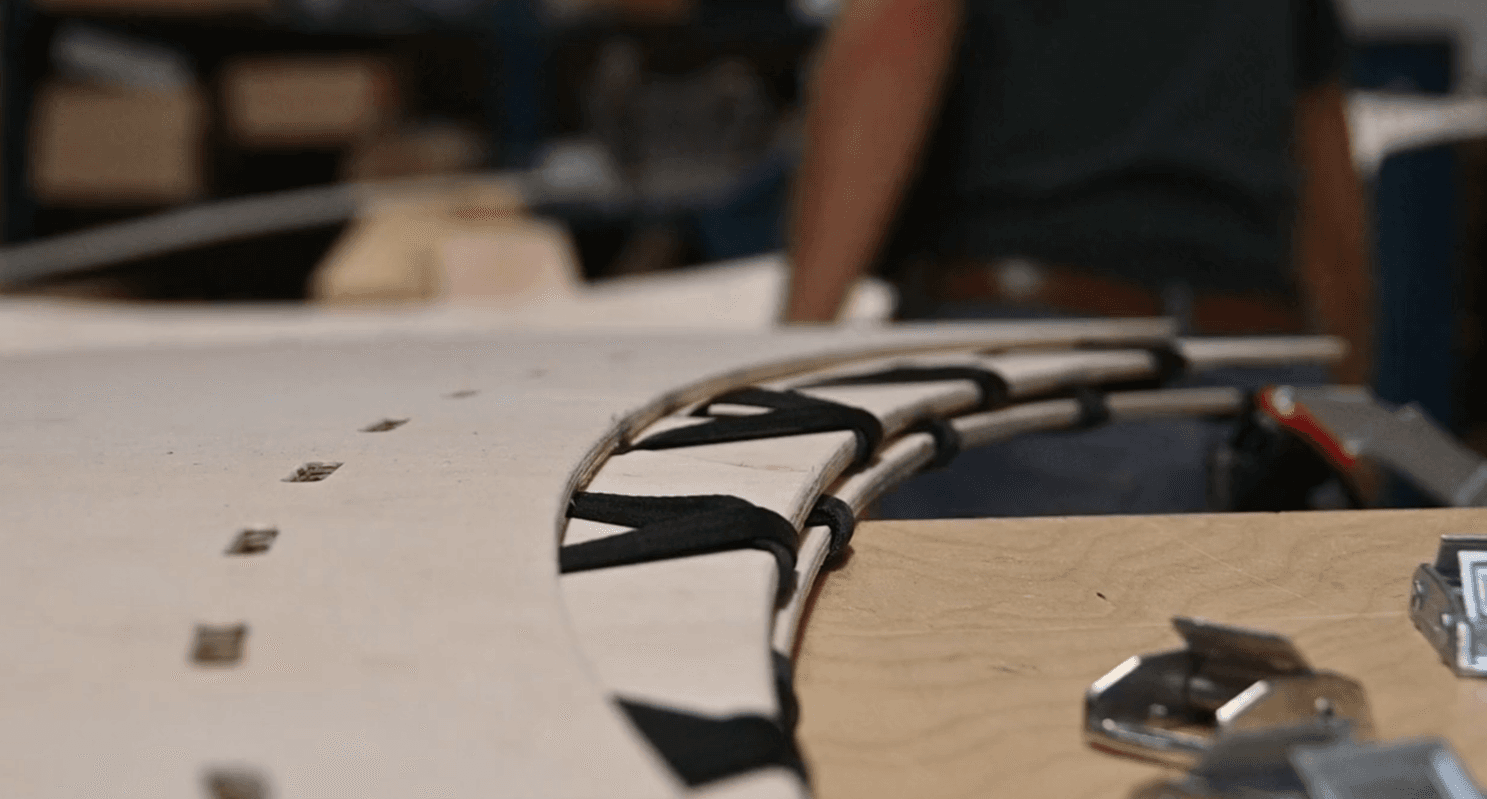
Initial prototype demonstrating the assembly of a curved-folded hinge in a closed loop
FEA Analysis Results (Showing Sigma Y)
Hinge and module to module connections check with FEA
Prototype concept, flat module
Prototype concept, transformed module
Prototype concept, 3 modules arrayed around a supporting base
Prototype concept, three assembled modules
CNC Fabrication of plate segments
Prototype Assembly
Prototype Assembly
Assembly of Module to Module Connection
View from interior of prototype
Gridshell structures as a proposed architectural use case of system
Curve-Fit Timber Quick Overview
1 / 26

Curve-Fit

Spatial Frames Through Deployable Curved Folded Modules

The aim with Curve-Fit is to develop a lightweight timber structural frame by means of aggregating deployable modules which can be fabricated using easily accessible machinery while allowing geometrical freedom at an architectural scale. The production of geometrically customized components for free-form structures in the timber construction industry currently incurs high consumption of resources, compromising on the environmental advantage of using timber. Available technologies to produce components such as curved glulam and curved CLT require complex multi-step fabrication, molds or a high-energy input, and are inefficient to maneuver with during the construction phase. This thesis explores an alternative to produce geometrically versatile structures by the development of a novel structural frame system built from initially flat timber modules. Each module can be quickly deployed into a tri-dimensional state and assembled with other modules, creating a continuous network of vertical and horizontal load-bearing elements that can achieve various geometries and support conditions. By using widely available fabrication tools such as a 3-axis CNC machine, this system also investigates the simplification of production frameworks for curved timber components, while allowing their efficient transportation and storage. After the structure has been used, each module can be un-deployed for relocating the structure or its efficient deconstruction and potential repurposing of its components. Finally, it is proven with a 1:1 scale demonstrator that large-scale load-bearing structures can be built by aggregating bent active conoidal timber modules without compromising on the architectural freedom. With a simplified production framework, increased maneuverability during production and its capacity for relocation and repurposing, this system can potentially speed up construction and reduce resource consumption in the timber construction industry while contributing to circular economies.

Materials
Timber
Team
Alan Eskildsen Michel, Pinaki Mohanty, Carolina Leite Vieira
Location
Stuttgart, Germany
Year
2021-2022
Course
Integrative Technologies and Architectural Design Research, Master Thesis
Professors
Prof. Dr. Jan Knippers, Prof. Achim Menges
Tutors
Dr.-Ing. Axel Körner, Simon Bechert
Institutes
ITKE (Institute of Building Structures and Structural Design), ICD (Institute for Computational Design and Construction)
University
Universität Stuttgart
Exhibitions
The “Curve-Fit” column prototype was exhibited in Room 2.08 of the K1 Building, Universität Stuttgart, for two weeks in October 2022.
It is now efficiently flat-packed, stored and ready to be deployed and exhibited again.
For exhibition inquiries please refer to the following contact form and state your interest.
Publication
Eskildsen, A., Mohanty, P., Vieira, C. L., Bechert, S., Körner, A., & Knippers, J. (2024). Curve-Fit, Free-Form Timber Structures through Curved-Folded Modules. In P. Block, G. Boller, C. DeWolf, J. Pauli, & W. Kaufmann (Eds.), Proceedings of the IASS 2024 Symposium: Redefining the Art of Structural Design (Zurich, Switzerland, August 26–30, 2024). Universität Stuttgart: ICD & ITKE. DOI: 10.5281/zenodo.17096600
Award
Green Concept Award 2026 Winner, Building Design Category
Project Gallery
Videos